
I’m a self‑driven, results‑focused professional with a broad skill set and a proven history of delivering meaningful impact. I don’t just provide solutions; I actively pursue them. When I don’t have an answer or direction, I research, test, and uncover it. My priority is helping organizations grow, perform, and succeed through competence, adaptability, and strategic execution.
Engineering, Technical Experience & Services
Phone: 661-365-5792

-
Product R&D and Product Management, Design for Manufacturing (DFM) across Consumer Electronics, Pro/Commercial environments for Audio‑Video, Security, Home Automation, LED Lighting, AC/DC Power, Wired/Wireless Networking, and IP/PoE systems. Experienced in taking hardware and software designs from proof‑of‑concept through full product launch.
-
Value‑Added Product Solutions Engineer with deep expertise in creating innovative, market‑ready solutions.
-
Electronic Engineering, Technical CAD drawings, and Consulting for product development, system architecture, and engineering documentation control/management.
-
Residential and Pro Audio/Commercial AV, Lighting, Security and Automation System Integration, including technical design, system layout, and implementation strategies for new construction projects and retrofits.
-
Creation and design of product catalogs, brochures, technical literature, instruction manuals with detailed product information/ technical specifications, packaging, website technical information/diagrams, and application notes.
-
UI/UX Design for intuitive, user‑focused interfaces across hardware and software platforms.
-
Development of technical training materials and support documentation for sales teams, trade shows, and partner education.
-
Creation of technical concepts, imagery, and presentations for customer engagement, email campaigns, LinkedIn content, training, and marketing initiatives.
-
Marketing support through technical resources, product insights, and strategic guidance to strengthen brand awareness and identify key markets and customer segments.
-
Extensive familiarity with industry leaders in AV and home automation products, systems, and technologies.
Please Note! This website is constantly in flux and a work in progress and is being updated, modified on a reqular basis.
Home Multizone Audio and Surround Sound Sytems


Seamlessly Listen to music throughout your home with independent control over each location or all locations, using multiple interfaces.
Key Considerations
-
Number of Zones: Decide how many areas (rooms, outdoor spaces) will have independent audio control.
-
Source Flexibility: Choose whether each zone can play different audio sources or sync with others.
-
Control Interface: Opt for mobile apps, simple inwall controllers, wall-mounted touchscreens, or voice assistants for zone management.
-
Hardwired vs Wireless: Wired systems offer better fidelity and reliability; wireless systems are easier to install and expand but come with challenges of reliability and audio synchronization between zones.
-
Speaker Type: Use in-ceiling, bookshelf, outdoor, or floor-standing speakers based on room aesthetics and acoustics.
-
Amplification Needs: Ensure your receiver or amp can power all zones, some setups require external amps for larger homes.
-
Cabling Type, Gauge, Infrastructure requirements.
-
Latency & Sync: Minimize delay between zones to avoid echo effects, especially in open-concept layouts and hard wired versus wireless (Wi-Fi) systems with latency issues.
-
Smart Home Integration: Consider compatibility with systems like Alexa, Google Home, or Control4, Crestron, Savant, Josh.AI for automation.

Industry Consumer Brands for Multizone Audio
-
Alexa
-
Blaze-Audio
-
Bluesound
-
Google Home
-
Juke Audio
-
Russound
-
Sonance
-
Sonos

Business, Home, Home Theater & Commercial Speakers
It is important to select the correct speakers for each type of environment and room or area size. Costs can be from one extreme to the other depending on your listening habits and preferences.
Select speakers that can handle the full amount of wattage and (SPL) Sound Pressure Level required for the room in consideration for proper quality sound delivery. Does the environment require Stereo, 3.1, 5.1, 7.1 or other formats of audio performance. do you need to use speakers that are hard wired or wireless, several factors come into play. Room Acoustics and proper placement of the speakers is also crucial for sound imaging related to stereo and multichannel audio systems.
Room area acoustics can also affect the performance of audio and knowledge of acoustics comes into play. Understanding room acoustics is just as crucial as choosing the right speakers. The way sound interacts with your space can make or break clarity, imaging, and bass response. Below are the key acoustic factors to consider when setting up speakers in any home audio system.
When the audio source is low-fidelity analog or low-bit-rate digital, speaker output is inevitably compromised, resulting in degraded sound quality.
How Bitrate Impacts Sound Quality
-
More detail: Higher bitrates capture subtle musical overtones and transient sounds with clarity.
-
Reduced artifacts: Increasing bitrate minimizes compression artifacts like “warbling” or distortion.
-
Dynamic range: Greater data throughput preserves both very soft and very loud passages.
-
File size trade-off: As bitrate climbs, so does file size, affecting storage and streaming bandwidth.
Bitrate vs. Sample Rate and Bit Depth
While bitrate governs overall data flow, two other parameters affect digital audio:
-
Sample Rate (Hz): How many times per second an analog waveform is sampled. Standard CD audio uses 44.1 kHz, capturing frequencies up to ~22 kHz.
-
Bit Depth (bits): How many bits describe each sample’s amplitude. CD-quality uses 16-bit depth for a ~96 dB dynamic range; 24-bit extends that to ~144 dB.
Together, sample rate and bit depth define the raw data rate (bitrate) before any compression is applied.
Use of DSP Audio Processors and Equalizers:
Digital signal processing (DSP) audio processors and equalizers bring a level of precision and flexibility to home audio and home theater systems that passive electronics simply can’t match. By applying adaptive filtering, parametric/graphic equalization, and dynamic room correction, DSP units automatically compensate for acoustic anomalies, speaker mismatches, and frequency peaks or nulls caused by furniture and architectural features. They enable built-in crossover management for seamless integration of subwoofers and satellite speakers, along with time-alignment functions that synchronize multi-channel playback for a coherent soundstage. With user-definable presets and real-time manual adjustments or via mobile apps, you can tailor tonal balance and bass response to every listening scenario—from blockbuster movies to live-concert recordings. The result is a consistently clear, immersive experience where dialogue, music, and effects emerge with lifelike accuracy and impactful dynamics.
Speakers (Indoor/Outdoor), (Wired/Wireless)
Speakers can have different uses for Indoor and Outdoor applications and multiple use cases from design, appearance, sound quality, from physical speakers in a room or concealed speakers in a wall or outside speakers in different exposed weather conditions on the ground or mounted to a patio cover or wall.
Types of Speakers
-
Cabinet Speakers
-
In-Ceiling, In-Wall Speakers
-
Outdoor Waterproof Patio Speakers
-
Outdoor Landscape Speakers
-
Subwoofers, Powered or Passive
-
Soundbars with and without wireless Sub Woofers
-
Home Theater Surround Sound Speakers Systems
-
Wireless Speakers, Subwoofers

Common Digital Audio Bitrates and Typical Use Cases
Area Acoustics: Direct Sound vs. Reflected Sound
Direct sound travels straight from your speakers to your ears, carrying the purest audio signal. Reflected sound bounces off walls, floors, ceilings, and furniture before reaching you.
-
Early reflections (those arriving within 20ms of the direct sound) can blur imaging and collapse the soundstage.
-
Late reflections add reverberation, which may be desirable in moderation but can muddy detail when excessive.
Popular Audio Distribution Hardware Wired/ Wireless
-
Alexa: (App & Voice Controlled Wireless Single/Multizone Amplified Audio Speakers)
-
Audio Control: (Commercial & Residential Multizone Audio Amplifies)
-
Autonomic: (Home and Commercial Multizone Audio Hardware and Music Streaming Systems)
-
Blaze-Audio: (Amplifiers, Loudspeakers, Controllers, and Software)
-
Bluesound: (Wired, Wireless Speakers)
-
Bose: Wired/Wireless products, both Home and Professional
-
Google Home: (Wireless Speakers)
-
Juke Audio: (Multi-room Amplifiers with Wireless Streaming Capabilities)
-
Lea Professional: (Home * Commercial Pro Audio Amplifiers and IoT Technologies)
-
Origin Acoustics: Speakers, Soundbars, Powered Subwoofers, Amplifiers
-
OSD Audio: (Commercial & Residential Amplifiers, Speakers, Subwoofers)
-
Parasound: (Home & Commercial Pro Audio Pre-Amplifiers and Amplifiers)
-
Pyle: (Wired & Wireless Amplifiers & Speakers)
-
QSC: (Amplifiers, Speakers, Subwoofers, Software)
-
Russound: (Amplifiers, Wired Connectivity, Wireless Control Software)
-
Savliiq: (Amplifiers, Speakers, Subwoofers, Software)
-
Sonos: (Wired, Wireless Speakers & Amplifiers)
-
Sonance: (Speakers & Amplifiers)
-
Triad: (Speakers, Soundbars & Amplifiers)
Indoor Multi-Zone Audio Best Practices
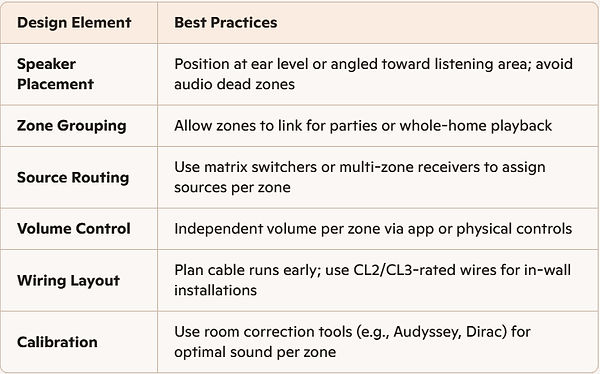
Cable Info
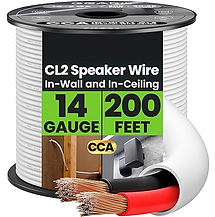
Why Wire Gauge is Important!
Choosing the right American Wire Gauge (AWG) ensures minimal signal loss, preserves audio clarity, and prevents amplifier strain. Thicker wires (lower AWG numbers) have lower resistance, which is critical when running cable long distances or powering multiple zones simultaneously.

Recommended Gauge vs. Maximum Run (8 Ω Speakers)
(Data for 8 Ω speakers; halve these lengths for 4 Ω models)
Speaker Cable Material & Installation Considerations
-
Oxygen-free copper (OFC) offers the best conductivity and longevity; copper-clad aluminum (CCA) can be used when budget is tight but requires thicker gauge to match performance.
-
Always choose CL2/CL3-rated cable for in-wall or ceiling installations to meet fire-safety codes and maintain audio quality.
-
Use Stranded conductor cables, they are more flexible and easier to terminate than solid core cables and are not ideal for tight attic or wall runs.
If any zone runs over 50 ft or drives a low-impedance (4 Ω) speaker load, bump up two AWG sizes (e.g., from 16 AWG to 14 AWG) to keep power loss under 5% of speaker impedance. This headroom ensures each zone plays at full fidelity, even under peak loads.
Note: For outdoor wiring, use in the ground, use direct burial cable or install schedule 40 for better protection from the elements when buried in the ground.

Sonance Multizone Audio Using Alexa Block Diagram Example
Alexa Echo Multi-Zone Block Diagram by Rooms and Products.
New Reference Interface Balun Design POC that was provided to Sonance.

Surround Sound Audio
What Is Surround Sound Audio?
Surround sound is an audio reproduction technique that uses multiple speakers placed around the listener to create an immersive, three‑dimensional sound field. Instead of all audio coming from the front (like traditional stereo), surround systems position sound in front, sides, behind, and sometimes above the listener to mimic how we naturally hear sound in real environments.
Surround sound is used in home theaters, cinemas, gaming, VR, broadcast, and professional audio to deliver a more realistic and engaging listening experience.
The Right Speaker Layout needs to be (Matched to the Room + Content)
A good system starts with a layout that fits the room’s geometry and the client’s listening habits.
Core elements:
-
Front L/C/R – matched timbre, proper toe‑in, correct height
-
Surrounds – placed at 90–110° for envelopment
-
Subwoofer(s) – ideally 2 subs for smoother bass response
-
Height channels (Atmos/DTS:X/Auro‑3D) – correctly placed overhead or high on walls
Why it matters
Speaker placement determines imaging, clarity, and spatial accuracy more than the brand or price tag.
Channel‑Based Surround Formats (Traditional Discrete Channels)
These are the classic speaker‑layout formats (5.1, 7.1, etc.).
Core Layouts
-
3.0 – L/C/R
-
3.1 – L/C/R + Sub
-
4.0 – L/R + Surround L/R
-
4.1 – L/R + Surround L/R + Sub
-
5.0 – L/C/R + Surround L/R
-
5.1 – L/C/R + Surround L/R + LFE
-
6.1 – 5.1 + Rear Center
-
7.1 – 5.1 + Surround Back L/R
-
9.1 – 7.1 + Front Height L/R
-
9.1.2 – 9.1 + 2 Height/Top
-
11.1 – 9.1 + Surround Height L/R
-
13.1 – An 11.1 layout with added wide and/or height channels (rare in-home setups)
These layouts are used by Dolby Digital, DTS, PCM multichannel, and many legacy formats.
Codec Families Used in Home Theater
Dolby Codecs:
-
Dolby Digital (AC‑3) – 5.1
-
Dolby Digital EX – 6.1 matrix
-
Dolby Digital Plus (E‑AC‑3) – 7.1, Atmos metadata
-
Dolby TrueHD – Lossless 7.1, Atmos
-
Dolby MAT 2.0/2.1 – PCM container for Atmos (used by Apple TV, Xbox)
DTS Codecs:
DTS Digital Surround – 5.1
-
DTS‑ES Matrix / Discrete – 6.1
-
DTS‑HD High Resolution Audio – 7.1
-
DTS‑HD Master Audio – Lossless 7.1
-
DTS:X – Object‑based
-
DTS:X Pro – Expanded object‑based
-
PCM
-
Multichannel PCM – 5.1, 7.1, 9.1 (lossless, uncompressed)
Commercial Audio
Commercial audio refers to professional-grade sound systems engineered for public and corporate environments, delivering clear, consistent music, announcements, and audio reinforcement in spaces such as retail stores, restaurants, conference centers, warehouses and stadiums.
-
System design must account for room acoustics, coverage patterns, and zoning to ensure even sound distribution.
-
Components typically include ceiling or wall-mounted speakers, amplifiers, mixers, and paging microphones.
-
Integration with control interfaces and network protocols allows centralized management and automated scheduling.
-
Reliability and ease of maintenance are critical for 24/7 operation in commercial settings.
-
Speakers and audio distribution hardware can consist of 4-8 ohms/ 70V/100V amplifiers and other related interface hardware.
Why do Commercial Audio Systems use 70V and 100V Amplifiers and Speaker Systems
Commercial audio systems often use 70V and 100V constant-voltage distribution to make long cable runs and multi-speaker setups simple and efficient over a single cable run. By stepping up the amplifier’s output voltage with line-matching transformers, current on the speaker lines stays low. This lets you use smaller, less expensive cabling and keeps line losses to a minimum—even over hundreds of feet.
Each speaker has its own transformer with different wattage taps that connect into the same high-voltage line through its own transformer, allowing dozens or even hundreds of speakers to share one amplifier without complex impedance calculations. In the U.S., the 70 V standard (actually 70.7 V RMS, 100 V peak) and was chosen to stay just under electrical-code voltage thresholds and avoid extra conduit requirements. Internationally, a 100 V nominal line is common, delivering the same benefits across global installations.
Mitigating Frequency Loss
-
Use high-quality 70V/100V Speaker Line Matching Transformers that are in line with the wattage requirements for your design with wide frequency bandwidth specs.
-
Choose speakers designed for music playback, not just paging.
-
Ensure proper system design and calibration, especially for distributed audio setups.
Causes of Frequency Response Loss in 70V/100V Audio Systems
A typical 70V/100V speaker used for paging or background music may have a usable range around 100 Hz – 15 kHz, but premium models can extend lower and higher. The exact response always depends on the specific speaker and transformer quality.
-
(Transformer Saturation at Low Frequencies): Transformers used in 70V/100V systems can saturate more easily at low frequencies, which leads to diminished bass performance. This is especially noticeable with cheaper or poorly designed transformers.
-
(Insertion Loss): Low-cost transformers introduce insertion loss, which can affect the overall frequency response of the system. While this trade-off allows for simpler wiring and smaller gauge cables, it can compromise audio fidelity.
-
(Transformer Bandwidth Limitations): Transformers have inherent bandwidth limitations. High-quality models can handle a wider frequency range, but budget options may roll off both low and high frequencies, reducing clarity and depth.
-
(Wire and Transformer Losses): Combined Even though 70V/100V systems reduce wire loss by allowing longer cable runs with smaller gauge wire, the transformer itself introduces its own losses. These combined losses can subtly degrade the audio signal.
70V/100V Indoor/Outdoor Attenuators
70V/100V Attenuators are used primarily for local single zone or multiple zone locations to manually adjust for proper signal levels for proper audio settings in different environments or specific locations that require different SPL levels. Also some installations require individual controls that need to be easily accessible by users to increase or decrease or even mute audio in specific area's when needed. When specifying and using these attenuators, they should be selected for the proper wattage rating related to the power being driven from the source amplifier to prevent hardware failures.
Outdoor Audio, Speakers, Amplfiers, Cabling
Outdoor audio is essential for personal use, events and entertaining outdoors. Whether it is a simple patio setup or large back yard with lots of space, seating areas and a barbeque and swimming pool area, audio performance is essential for good sound reproduction. Several design considerations need to be considered and implemented.
Design
Is the installation new or a retrofit? Each design requires different strategies and installation processes from start to finish. How far are the amplifier/amplifiers from the speakers, in some cases if the amplifiers are more than 200ft away, it's better to locate the amplifier/amplifiers closer to the speakers and have the source audio signals be further away. You could use a 70V/100V system, but the audio quality would suffer.
-
Weatherproofing & Durability: Use speakers and equipment rated for outdoor use IP (Ingress Protection) rated products and enclosures.
-
-
Cabling Infrastructure: Use direct-burial or conduit-protected cabling to prevent damage from landscaping or foot traffic.
-
-
Speaker Placement & Coverage: Avoid “hot spots” or dead zones by considering dispersion angles and distances.
-
Scalability & Flexibility: Design with future expansion in mind (additional zones, upgraded sources). Consider wired vs. wireless options depending on project size and layout.
-


In-Ceiling Speakers
Cabinet Speakers

In-Wall Speakers

Outdoor Waterproof Patio Speakers

Outdoor Landscape Speakers

SubWoofers

Sound Bars with or without Sub Woofer

7.1ch Sound Bar with Dolby Atmos, Surround Speaker Sound System

Wireless Speakers,
Sound Bars and
Sub Woofers

DSP Audio Processors

32 Band Stereo Graphic EQ


Alexa Audio Hardware

7.2 Channel Surround Sound Receiver

14/4 16 AWG Cable

Commercial Audio Hardware

Commercial Audio Hardware Warehouse Paging

Surface Mount Speaker with Adjustable 70V, 8 ohm Settings


In Ceiling 70V Speakers with
8 Ohm and Multiple 70V Cable Taps

Indoor 70V/100V
Inwall Attenuator
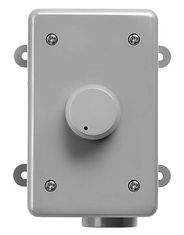
Outdoor 70V/100V
Surface Mount Attenuator

SIP Audio IP 2-Way
Interface Hardware

SIP Indoor/Outdoor
IP Speakers

Line Array Speakers with Subwoofer
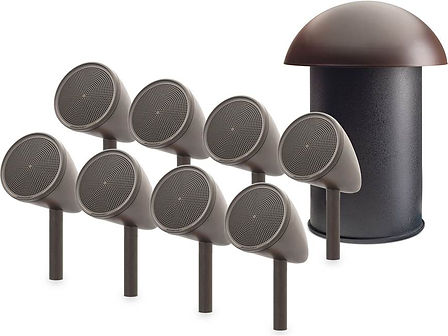
Weatherproof Outdoor Landscaping Speakers

Weatherproof Outdoor Patio Speakers
